
TL-3900M series ♦ Precision Impedance Analyzer with LCR Meter
Short Description
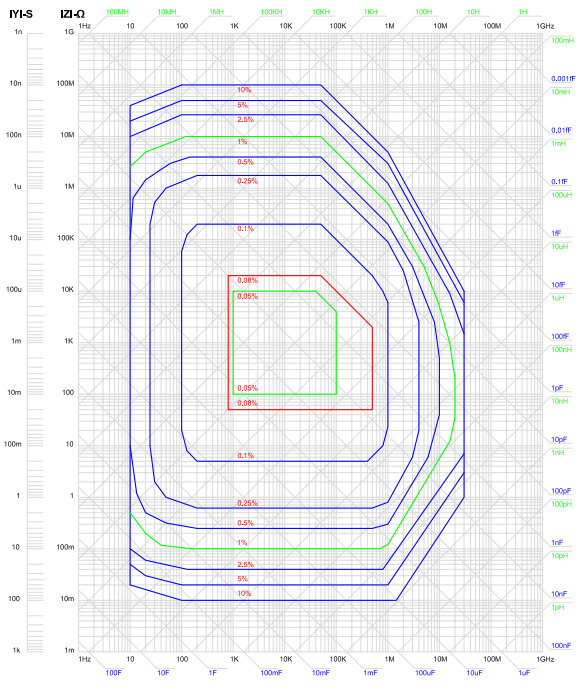
High-frequency precision impedance analyzer utilizes automatic balancing bridge technology and a four-terminal Kelvin test terminal. Its measurement frequency range covers 20Hz ~ 25MHz, with a minimum resolution of 1mHz and a basic measurement accuracy of 0.1%.


| TL-3900M series is high-frequency precision impedance analyzer utilizes automatic balancing bridge technology and a four-terminal Kelvin test terminal. Its measurement frequency range covers 20Hz ~ 25MHz, with a minimum resolution of 1mHz and a basic measurement accuracy of 0.05%. Also features impedance analyzer plotting and LCR meter measurement functions. Its high precision and wide frequency range meet the measurement requirements of most low-voltage parameters of components and materials. It can be widely used for impedance performance research and analysis of inductors, capacitors, resistors, microphones, resonators, LCD displays, varactor diodes, transformers and other components as well as for production line QC inspection. |
Features
● Automatic balancing bridge with 4-terminal Kelvin test terminals.
● Provides internal DC bias voltage -5V to +5V.
● Optional internal ±40V bias voltage source.
● Simplified Chinese and English operating languages.
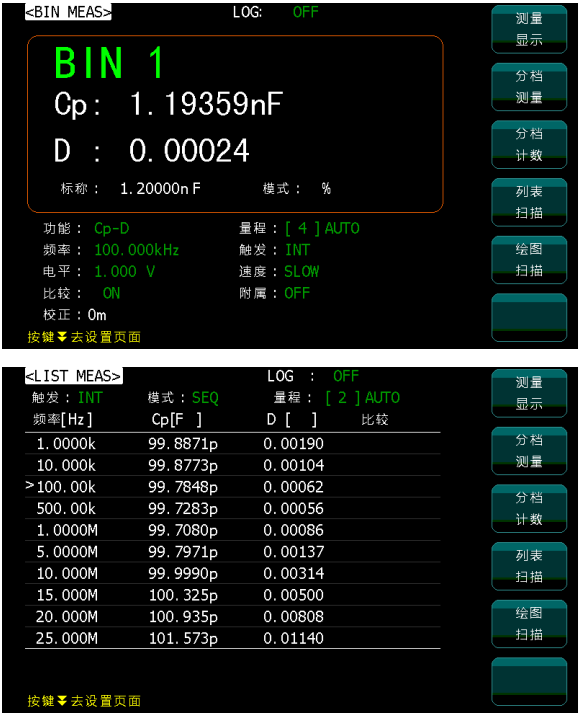
● Functions include range measurement, list scanning, plot scanning, open circuit, short circuit, load correction, etc.
● Plot scanning without relay jumping noise and waiting delay
● Equipped with conductivity σ and dielectric constant ε calculation functions.
● Saves test data and test conditions (to USB flash drive or internally).
● Directly copies plot scan images to USB flash drive.
● Enhanced test terminal protection functions.
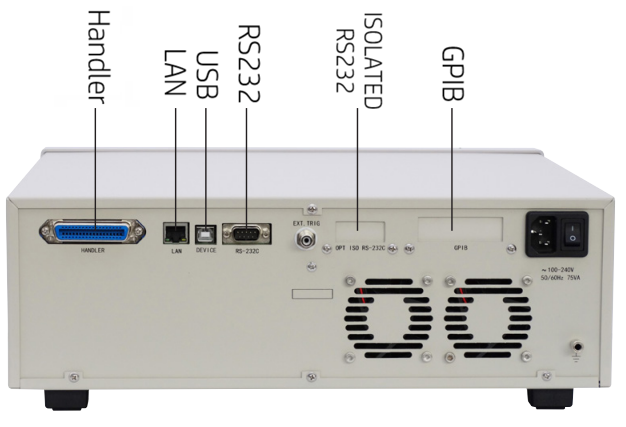
● USB, GPIB, RS232, LAN, and other host computer connection interfaces.
Automatic balancing bridge technology:
The simplified op-amp impedance measurement circuit used in the past is shown in the figure below:
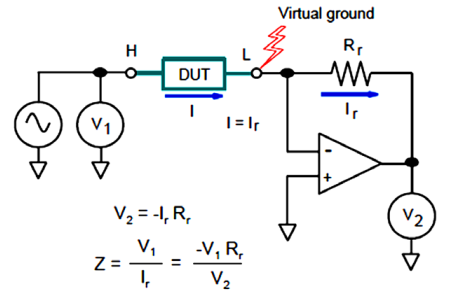
In actual operation, the virtual ground of the above circuit becomes increasingly unsatisfactory as the frequency increases. This prevents the entire current signal flowing through the device under test (DUT) from reaching the IV conversion standard resistor Rr, leading to a growing measurement error.
The TL-3900M series uses an automatic balancing bridge test principle, modifying the simplified measurement op-amp in the diagram above into a vector negative feedback network composed of an Lpot zero-detection circuit, a 0-90 degree digital phase detection and modulation/demodulation circuit, and an Lcur high-frequency drive circuit. This ensures that the virtual ground terminal of the measurement circuit is closer to the ideal. The two figures below show a comparison of the measured waveforms of Lcur (virtual ground) from the simplified op-amp impedance measurement circuit and the automatic balancing bridge impedance measurement circuit: The measured waveform of 6.8nF Lcur (virtual ground) using the simplified op-amp impedance measurement circuit at 1MHz is as follows:
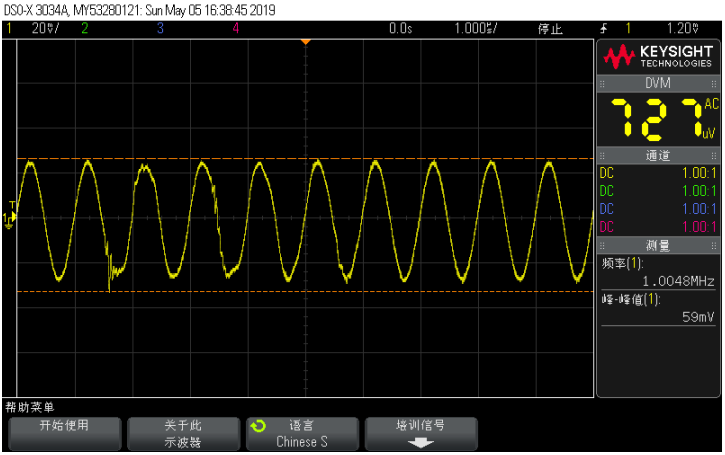
The measured waveform of 6.8nF Lcur (virtual ground) at 1MHz was obtained using a simple op-amp impedance measurement circuit.
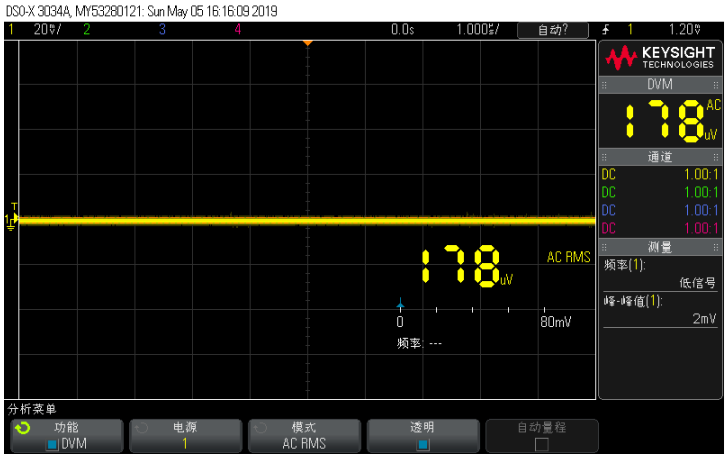
The measured waveform of 6.8nF Lcur (virtual ground) was measured at 1MHz using an automatic balancing bridge impedance measurement circuit.
As can be seen above, the peak-to-peak value of the virtual ground voltage using a simple op-amp impedance measurement circuit is as high as 59mV, while the peak-to-peak value of the virtual ground voltage using the automatic balancing bridge principle is only 2mV. Therefore, the virtual ground performance of the automatic balancing bridge is far better than that of the circuit using a simple op-amp for measurement.
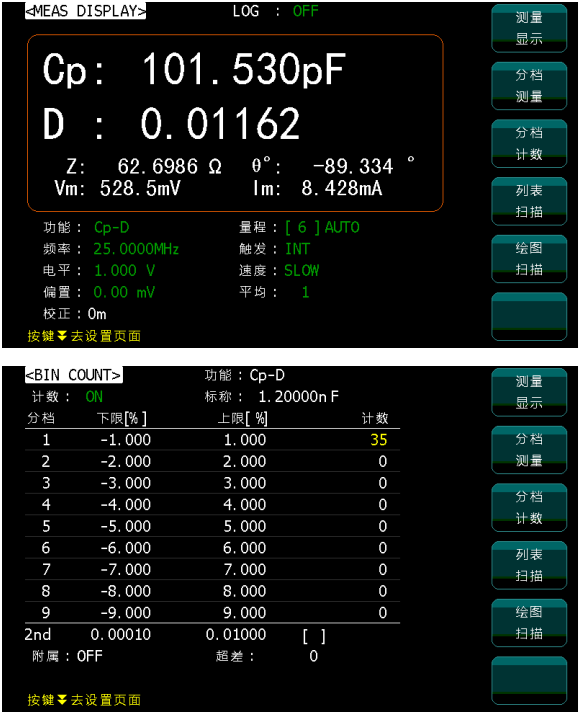
Enhanced test-end protection features:
In general, high-frequency impedance analyzers are highly susceptible to damage from electrostatic discharge (ESD) or residual charge on the test device (DDT) to ensure amplitude consistency at their test terminals. These imported instruments are very expensive.
To prevent incorrect connection of the capacitor to be charged to the measurement port, the ZX8590 optimizes and enhances its residual charge protection function, protecting the internal circuitry from the capacitor's discharge voltage.
Equipped with multiple interfaces:
Basic measurement accuracy
Comparison with international industry standard test results
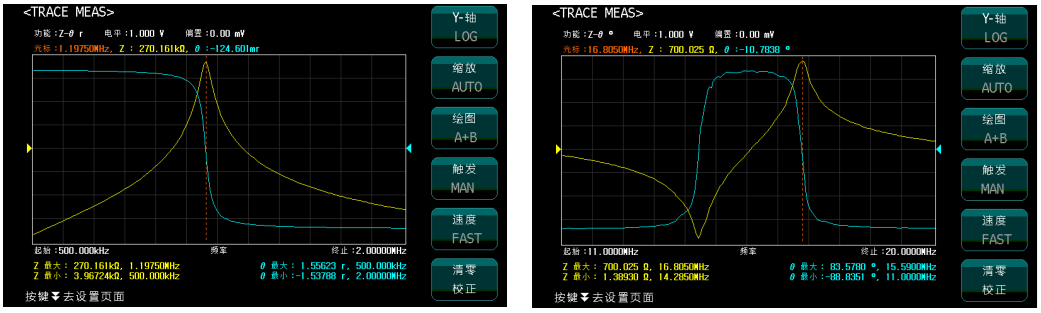
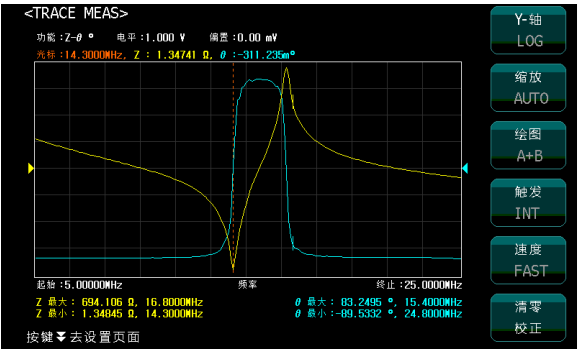
TL-3900M series measures the transformer's self-resonant TL-3900M series measures the anti-resonant frequency of a
frequency (SRF): 1.19750MHz piezoelectric ceramic wafer: 16.8050MHz


